0 out of 4 & a late win

It is a roller coaster. You get some win and a lot of loses. I am still adjusting to the reality that rejections are part of the process. I mean, I know it conceptually. But it still hits me and bothers me when things don't go as planned.
Grant applications are always hard. I like writing them, but it is difficult to wait many months for the results of a study section. In my case, I got my first not discussed. Ironically, it was Reviewer 2* who gave me my worst scores. I really thought I had a good chance. These results, together with my previous ones in Peru, get me a total of 0 awarded grants out of 4 submitted ones. Looking back, I shouldn't be that surprised. The average is very low, around 10% success rate. I know I need to apply to more grants (and I will do more this year), and at the same time, I want to make progress on my own work. It is hard to balance, but I am enjoying the journey.
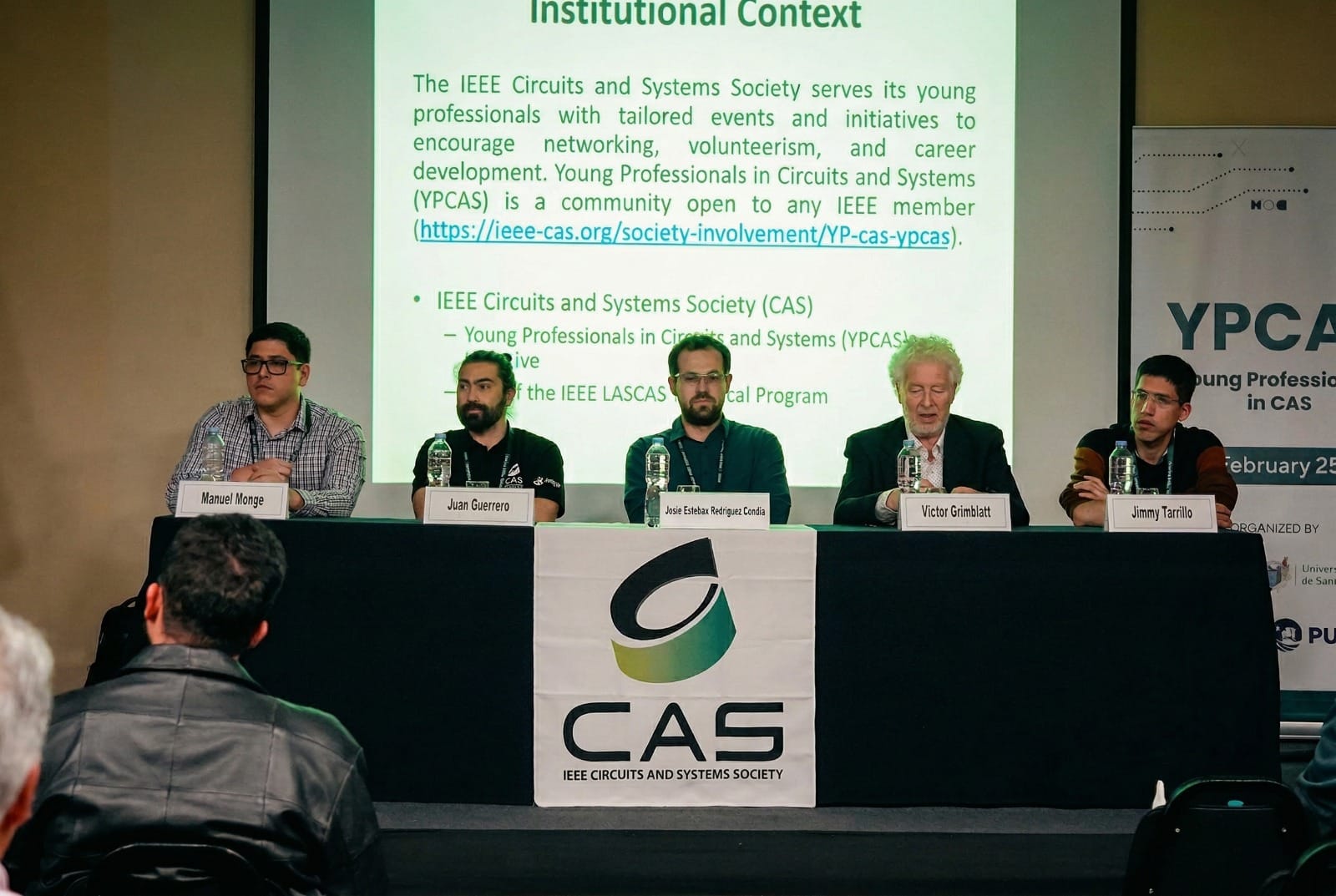
On a positive note, I traveled to Arequipa, Peru, to present our work published in LASCAS 2026. You can find the paper here. It was a great experience, was able to connect with colleagues all over South America, and was able to see my students in person. Here I share a picture of me during the Young Professional CAS Session where I was a panelist. The city of Arequipa is wonderful and the food exquisite. Highly recommended.
The community of Open-Source IC design is wonderful. I am very happy to be part of it. At the beginning of the year, I got inspired by a post from Tim Edwards where he asked the community for volunteers interested on participating in a tapeout he was sponsoring to the IHP Open MPW run of March 30th, 2026. I decided to follow the idea and asked the Peruvian IC community (which I have started to build) if there were anyone interested on participating in a tapeout that I was sponsoring to the same run. We form a team of 4, and were able to submit a small chip for fabrication. This is a big win! The first fully open-source chip designed only by Peruvian engineers. Find below some info about the chip and some pictures of the layout.
- Repository: https://github.com/openic-org/IHP__LDO6259
- Technology: IHP SG13G2 130 nm
- Area: 1.5 mm x 0.8 mm
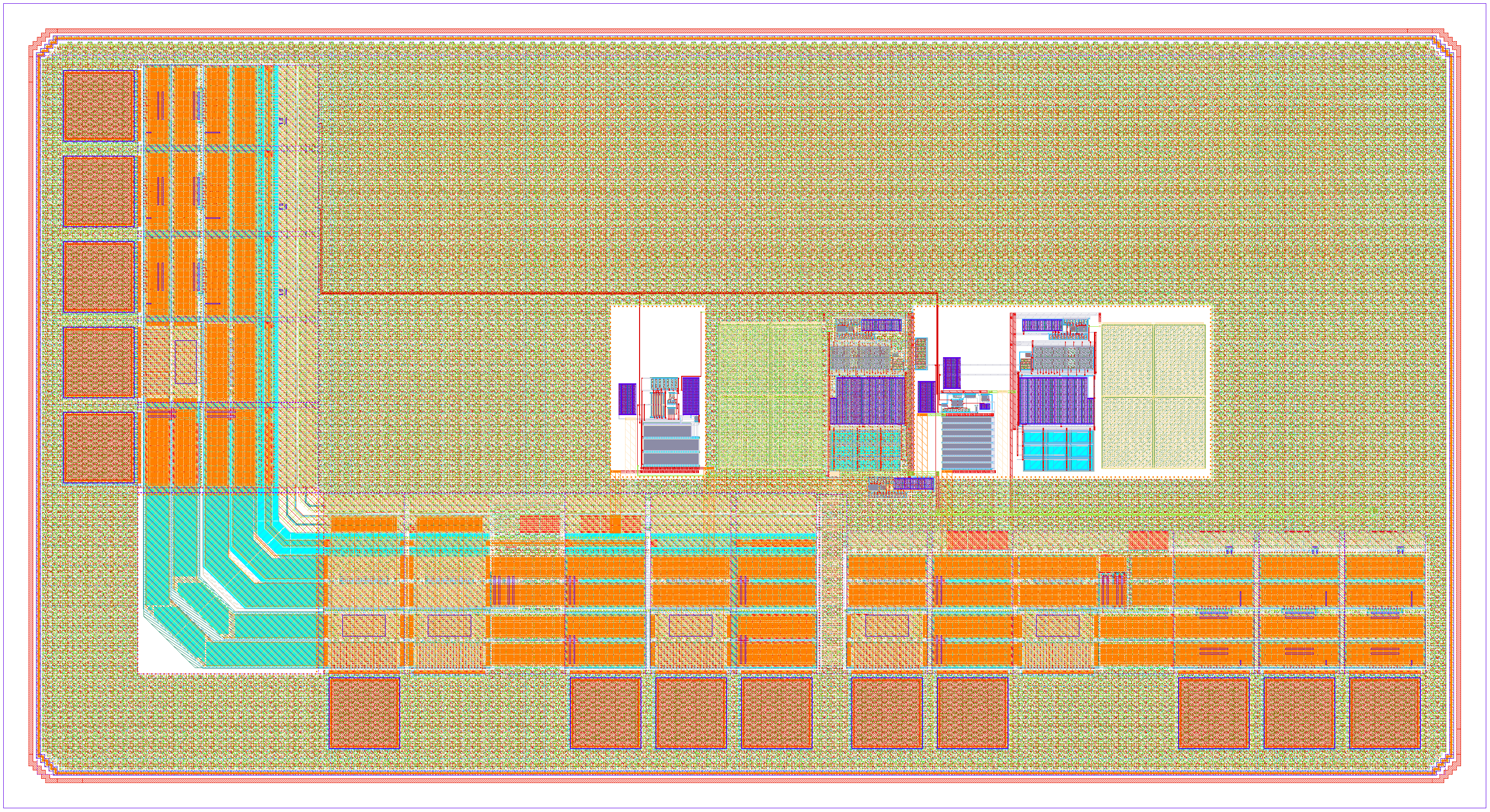
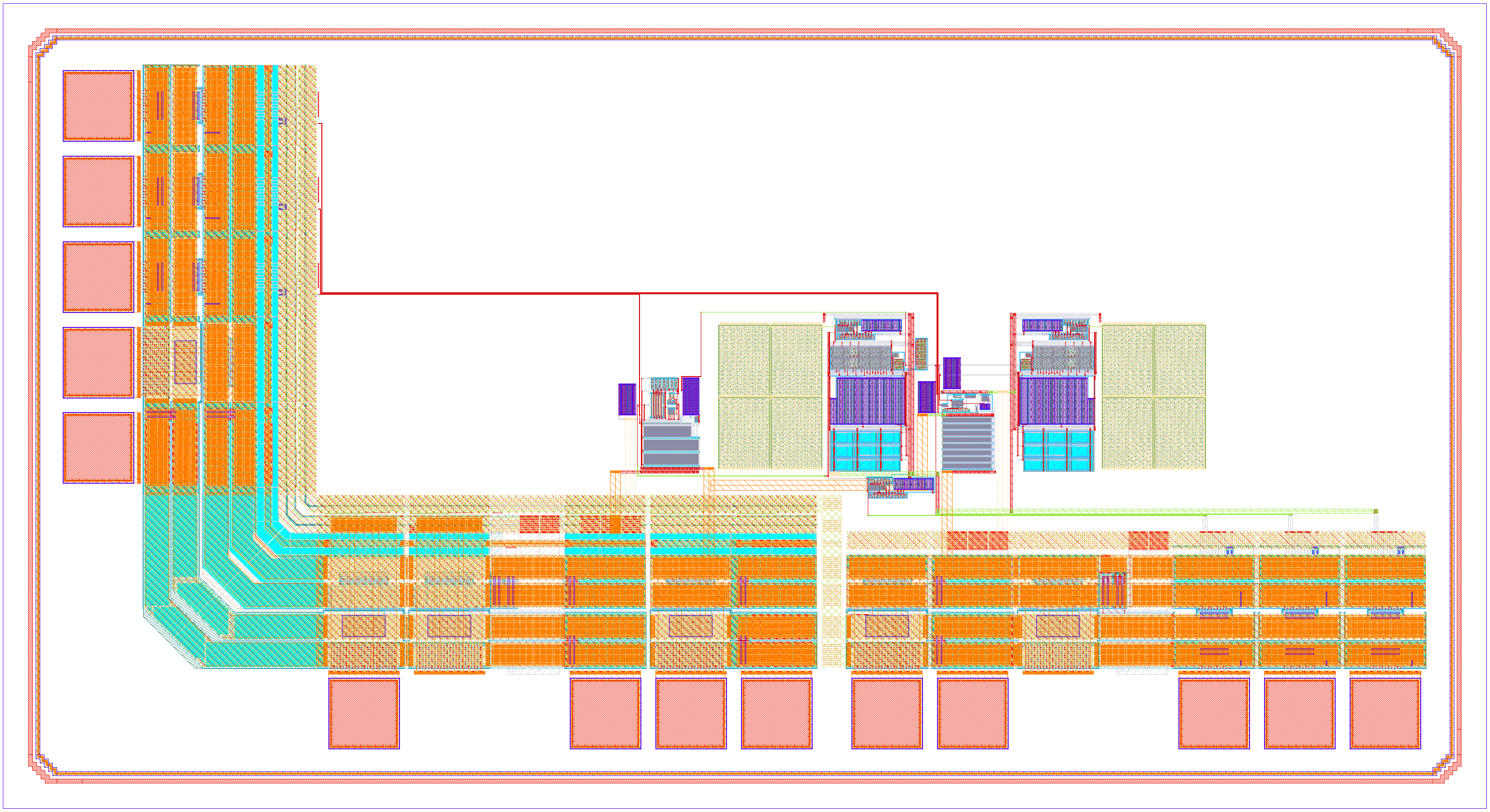
Pictures of the layout of the First Open-Source Peruvian Chip.
[*]: In the context of grant writing, Reviewer 2 makes reference to the reviewer who is over critical of the proposal in the sense of asking, requesting, pondering, raising concerns, not necessarily within the scope of the proposal. Here is an article about it and a portion of Google AI's Gemini's response to the search criteria: reviewer 2 meaning.
- Article: Watling C, Ginsburg S, Lingard L. Don't be reviewer 2! Reflections on writing effective peer review comments. Perspect Med Educ. 2021 Oct; 10(5):299-303. doi: 10.1007/s40037-021-00670-z. Epub 2021 Jun 11. PMID: 34115335; PMCID: PMC8505560.
https://pmc.ncbi.nlm.nih.gov/articles/PMC8505560/ - Portion of Gemini's response:
"Reviewer 2" is a commonly used academic, colloquial term for the often critical, rude, or difficult peer reviewer in the academic publication process. While Reviewer 1 often provides constructive or positive feedback, Reviewer 2 is infamous for being overly harsh, demanding unnecessary experiments, or raising petty objections that can delay or break a manuscript...